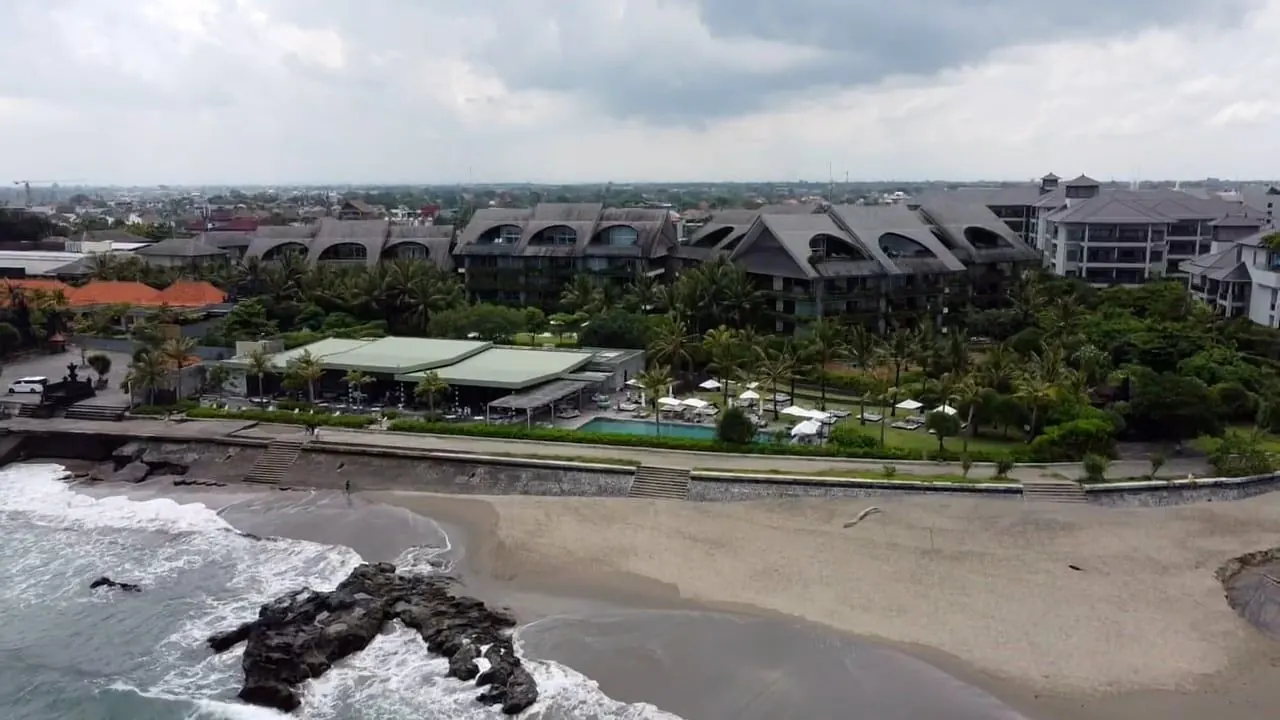
A villa serves two people. A beach club serves four hundred, most of them arriving in the same ninety minutes, all of them expecting the bed they saw in the photograph.
Which is why almost everything that goes wrong in a beach club happens before the first drink: at the entrance, in the first four minutes, while somebody decides where these people are going to sit.
The first four minutes
A guest arrives with a booking and no idea how any of this works. Where do they check in, is the daybed included or extra, does the minimum spend cover drinks, and how long is this wait actually going to be?
Most of that should have been answered before they left the villa, in the confirmation, in one short message: where the entrance is, what the booking includes, what it does not, and what time to arrive for the view they are coming for. The entrance then has one job: acknowledge people within a few seconds, even when you cannot seat them yet.
"Ten more minutes, I'll come to you" is a service. Being left standing while three staff look busy is what gets written down afterwards.
If the wait is twenty minutes, say twenty. Guests plan around honest numbers and they resent optimistic ones, and your host knows the real number better than anybody in the building.
Four teams, one guest
The host knows about the birthday. The floor team does not. The bar has a reservation note nobody read. The guest asked to move two beds into the shade and has now asked three different people, which from their side feels like asking nobody.
- One short briefing before service: what is booked, which areas are tight, what special occasions are in, who is covering what.
- One place where seating changes are recorded, not four people's memories and a WhatsApp group.
- Whoever takes a request keeps it until they have confirmed it happened, even after passing it to the bar or the kitchen.
None of this is complicated. It is ten minutes before opening and a decision about who owns what, and it is the difference between a venue that feels organised and one that feels like it is coping.
The hours nobody is watching
A beach club looks immaculate at eleven in the morning. By four it has had three hundred people through it, and the towels, the loungers, the bathrooms and the tables tell that story in detail.
Guests rarely complain about this to staff. They photograph it. So put a name against each area and a rhythm against each hour, and ask the team to fix what they walk past rather than report it. A member of staff who clears a table on the way to somewhere else is worth more than any checklist on a clipboard.
When something is out of service, say so at the entrance rather than letting guests discover it, and offer the nearest alternative. Guests are remarkably tolerant of a closed shower and remarkably intolerant of finding out the hard way.
The sunset is the product
Everyone is here for the same forty minutes. That is the moment to be deliberate about: the music at a volume that still lets a table talk, the staffing weighted to it rather than evenly across the day, and the last round taken before it rather than during it.
Beyond that, the things that give a beach club a character of its own are usually small and local: a morning movement session before the heat, an occasional seafood or producer evening, something that belongs to this coast rather than to every coast. I would add those once the entrance and the handover are steady, and not a day before.

What I'd do with this
If your guests arrive happy and something goes flat between the entrance and the second drink, this is what I'd do.
This week
- I'd rewrite the booking confirmation so nobody arrives unsure what is included or when to come.
- I'd give the entrance one rule: acknowledge every guest within seconds, and give honest wait times.
- I'd start a ten-minute briefing before service, and one place where seating changes are written down.
Over a season
- I'd come in on a full Saturday as a guest, then work the floor with your team, and compare the two honestly.
- I'd write the host, floor and bar flow the way your venue actually runs, and train it during service.
- I'd set the rhythm for the areas nobody watches at four o'clock, with a name against each one.
I read every enquiry myself, and I answer it myself. Anggun